
Functional groups are recurring arrangements of atoms that give organic molecules predictable chemical properties. Recognizing them makes unfamiliar structures easier to reason about: instead of memorizing every molecule, you can identify the parts most likely to gain or lose protons, form hydrogen bonds, or participate in reactions.
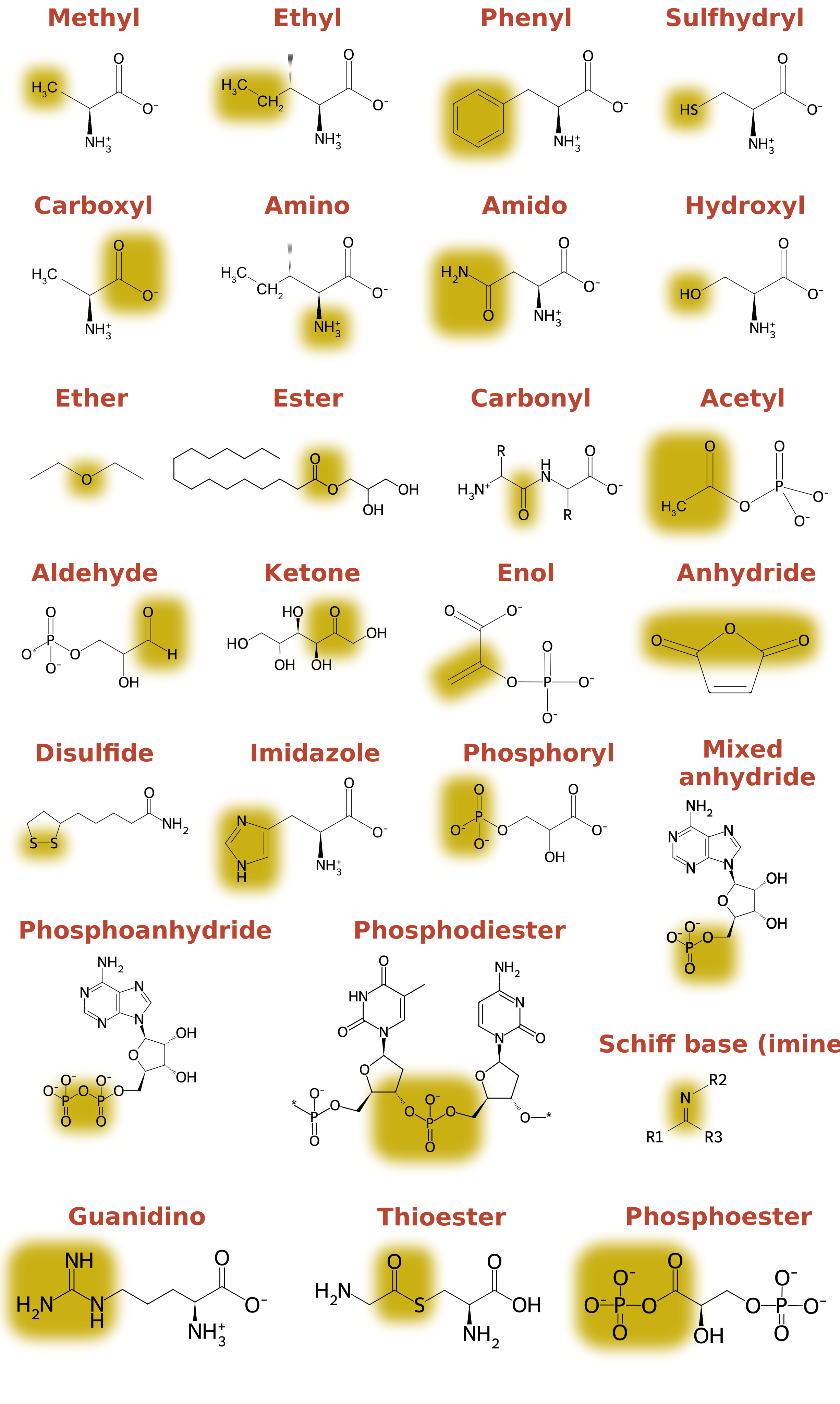
A useful way to read a structure
Start by locating charged or polar groups. Then identify potential acids, bases, hydrogen-bond donors, and hydrogen-bond acceptors. Finally, ask how the surrounding carbon skeleton changes accessibility and reactivity.
Groups to recognize quickly
- Hydroxyl groups often increase polarity and participate in hydrogen bonding.
- Carbonyl groups contain an electrophilic carbon and appear in aldehydes, ketones, carboxylic acids, and many derivatives.
- Amino groups can accept a proton, although their behavior depends strongly on neighboring groups.
- Carboxyl groups commonly donate a proton near physiological pH and frequently appear as carboxylates.
- Phosphate groups carry substantial negative charge and play central roles in energy transfer and molecular recognition.
- Sulfhydryl groups can form disulfide bonds and participate in redox chemistry.
Check your understanding
Choose a familiar biomolecule and mark every functional group you can find. For each one, predict whether it is likely to be charged at physiological pH and what intermolecular interactions it can form.